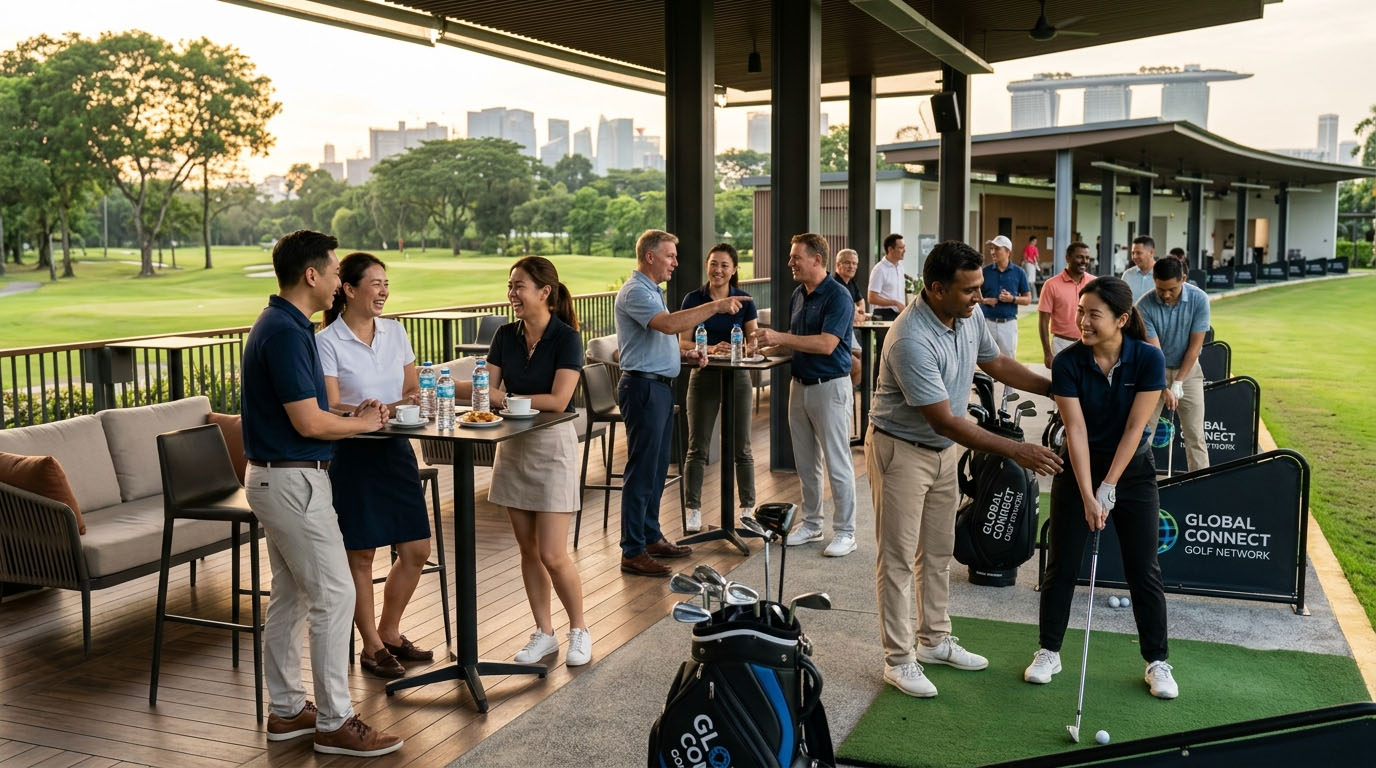
How to Add Golf to a Corporate Event Without Excluding Beginners
Golf has long been associated with business relationships, client hospitality, and relaxed networking. That makes it tempting for conference planners to build a golf component into a corporate event. The problem is obvious the moment the idea reaches a wider attendee list. Some guests play every month. Some have never held a club. Some may be interested but worry they will look awkward in front of colleagues or clients. If the format is wrong, golf can stop feeling like a smart networking activity and start feeling like a private club hidden inside a public event.
The good news is that this is mostly a design problem, not a golf problem. A corporate event does not need to mimic a traditional full round played by experienced golfers. It can be shaped around comfort, pacing, conversation, and choice. In a city like Singapore, where golf can be approached through driving ranges, short clinics, beginner lessons, simulator sessions, and casual social formats, planners have more flexibility than they might think. A practical Singapore golf guide can help event teams understand the difference between these formats before they build one into an agenda.
Quick Summary
- Golf works best at corporate events when it is optional, social, and clearly beginner friendly.
- Driving range sessions, short clinics, and team challenges are usually better than a full 18 hole round.
- Clear communication matters. Attendees should know dress expectations, time commitment, skill assumptions, and equipment arrangements in advance.
- Strong event design protects beginners from embarrassment and gives experienced golfers enough room to enjoy themselves too.
- The goal is not to turn everyone into a golfer. The goal is to create a relaxed setting for conversation and connection.
Why golf can work surprisingly well at a business event
Conference schedules are often packed with panels, breakout sessions, coffee breaks, sponsor conversations, and evening receptions. That structure can be productive, but it can also flatten every interaction into the same rhythm. Golf changes the pace. It gives people a shared activity, some movement, and a natural reason to spend time together without forcing constant eye contact across a small cocktail table. Conversation often feels easier when people are walking, watching, laughing at a bad shot, or learning something new together.
That matters for networking because strong professional relationships are rarely built through formal introductions alone. They grow in spaces where people can talk without feeling rushed. Golf creates those spaces well, especially in smaller groups. A client, sponsor, speaker, or internal team member may remember the event not because the ball striking was impressive, but because the environment made the interaction feel human. That is the real value of adding golf to a corporate program.
Still, golf has baggage. It can signal exclusivity, cost, tradition, and insider culture. That is exactly why event planners need to handle it carefully. The objective should not be to stage a golf event and hope beginners adapt. It should be to design a networking experience that happens to use golf as the backdrop. Once that mindset shifts, the planning decisions become much clearer.
The first rule, build for the least confident attendee
If you want a golf activity to feel inclusive, do not start by asking what a confident golfer would enjoy most. Start by imagining the attendee who is curious but uneasy. They may be a junior employee joining a client event for the first time. They may be an international delegate who did not pack golf attire. They may be worried about being the only beginner in a room full of senior executives. They may simply not want to spend four hours feeling out of place.
That attendee needs psychological safety before they need a club in hand. They need to know they will not be judged, slowed down, or left standing around while others speak a language they do not understand. If your event format protects that person, you usually end up with a better experience for everyone else too. Experienced golfers still get a social activity. Beginners get a soft landing. The event becomes more welcoming without losing its professional value.
This principle also aligns neatly with the broader push toward more inclusive event design. Corporate gatherings increasingly pay attention to accessibility, comfort, cultural awareness, and different personality types. A golf session should be treated the same way. It is not a side activity that escapes the normal standards of attendee experience. It is part of the event, which means it should be planned with the same care as registration flow, session timing, food, transport, and room setup.
Choose the right golf format, not the most traditional one
The biggest mistake planners make is assuming that “adding golf” means booking a full round on a championship course. For a mixed ability corporate crowd, that is often the worst starting point. It takes a long time, requires more confidence, and increases the risk that beginners feel exposed. It also makes logistics harder, especially if the golf activity sits alongside a conference timetable. A better approach is to choose a format based on the event’s networking goal, the attendee mix, and the amount of time available.
Here are the formats that usually work best for beginner friendly corporate events:
- Driving range social session
Guests hit balls in their own bay or shared lane, often with food and drinks nearby. This is one of the easiest options because people can participate casually, stop and chat, and take turns without pressure. - Beginner clinic with a coach
A golf professional teaches grip, stance, and a few simple swings. This works well when many attendees are new to the sport and need structure. It removes the feeling that everyone should already know what to do. - Team challenge or skills game
Think closest to the target, putting challenges, or simple points based games. This creates energy without demanding a full round or advanced technique. - Short course or executive course outing
If your audience wants on course play, a shorter course is often better than a full championship layout. It lowers the time commitment and makes the session feel less intimidating. - Golf simulator experience
Useful for indoor corporate venues, evening networking events, or weather backup plans. Simulators can feel modern and social, especially for mixed groups.
Notice what these options have in common. They reduce exposure, shorten the learning curve, and leave room for conversation. That is exactly what a corporate event needs. If you are already thinking about attendee flow and venue fit, the same mindset used in business networking event planning applies here too. The activity should support the event, not hijack it.
Set expectations early, because uncertainty is what makes beginners nervous
People are much more open to trying something unfamiliar when they know what they are walking into. A vague invitation that says “Join us for golf networking” can create more anxiety than excitement. Attendees may wonder whether they need their own clubs, whether they are expected to keep score, whether the session is only for golfers, how long it lasts, or whether they will look underdressed if they arrive in standard conference clothes.
Your event communications should answer those questions before anyone has to ask. This is where thoughtful copy can make a big difference. Instead of presenting golf as a skill based activity, frame it as a relaxed optional experience designed for all levels. Tell attendees whether equipment is provided. State the time commitment clearly. Mention if coaches will be present. Explain whether the session involves a driving range, a beginner clinic, or a light team challenge rather than a formal competitive round.
Even small details matter. If there is a dress code, say exactly what it is in plain language. If sports shoes are acceptable, mention it. If transport is arranged from the conference venue, make that visible. If non golfers are welcome to join for food, conversation, and light participation, say that too. The less guesswork there is, the more likely hesitant attendees are to opt in.
Make participation optional, but make opting in feel easy
Inclusive design does not mean forcing everyone into the same activity. In fact, one of the best ways to keep golf welcoming is to avoid treating it as the central test of event engagement. If attendees feel they must join or miss the real networking, beginners may attend while feeling trapped. That is not the atmosphere you want. Golf should be a genuine option, not a hidden obligation.
The best event programs make room for different energy levels and interests. You might offer a golf clinic in the late afternoon alongside a separate lounge based networking track, a wellness activity, or a hosted small group discussion. That way, attendees can choose the environment where they will be most comfortable while still getting value from the event. Choice reduces social pressure, and reduced pressure makes golf more approachable.
At the same time, do not bury the golf option under vague language. Make it sound inviting and easy to join. A line like “No golf experience needed, equipment provided, beginner coaching included” does far more work than a generic “corporate golf networking session.” It reassures the exact people who are most likely to hesitate.
Structure the session around conversation, not performance
Corporate golf should not feel like a sporting exam. It should feel like a social environment with an activity layered on top. That distinction changes how you set up the entire session. If the event revolves around who hits the longest drive or who keeps the best score, beginners will immediately feel the gap. If it revolves around light instruction, mixed teams, laughter, and rotating conversation, the pressure drops.
One simple tactic is to keep the activity stations short and varied. A 90 minute range session, for example, might include a welcome drink, a 15 minute beginner demo, 30 minutes of guided practice, a team target challenge, and plenty of time between food and conversation. That feels more like a networking event than a lesson. It also gives experienced golfers enough freedom to enjoy themselves without dominating the room.
Another useful tactic is to mix seating and standing zones. Not everyone wants to swing for an hour. Some guests may prefer to watch, talk, and join in occasionally. Comfortable lounge seating near the bays or putting area helps the event feel open to different participation styles. It turns golf into a social setting rather than a performance stage.
Use hosts and coaches to lower the social temperature
Beginners often worry about the tiny details. How do I hold the club? Where do I stand? What if I miss the ball? Those worries may sound minor, but they can stop someone from joining at all. Good hosts and coaches remove that friction quickly. A warm instructor who normalizes beginner mistakes can transform the tone of the session within minutes.
For that reason, a corporate golf activity should not be left to chance. If the format involves first timers, bring in coaches who are comfortable teaching adults in a social environment. Their job is not only technical. It is emotional. They help people feel at ease, keep the pace moving, and give the room permission to be playful. That matters far more than detailed swing advice.
Internal hosts also matter. Event staff or company representatives should actively welcome beginners, introduce people to one another, and keep the atmosphere balanced. If senior leaders or key clients are attending, brief them in advance on the tone you want. A beginner friendly session works best when the most confident people in the room understand that the goal is connection, not golf status.
Think carefully about group composition
The way you group people can either make a golf session feel easy or painfully self conscious. Putting all beginners together can sometimes help, especially in a coaching clinic where everyone is learning the basics. In other settings, though, it may make the activity feel segregated, as if the “real golfers” are elsewhere having the proper experience. A mixed format is often stronger, as long as it is managed well.
Try building groups with a blend of confidence levels, job roles, and social styles. Pair a couple of relaxed experienced golfers with beginners who are open to trying. Avoid placing a nervous first timer in a small group dominated by highly competitive players. Think about relationship chemistry too. A client team, a sponsor group, or a mix of delegates from different companies may all require slightly different hosting.
This is where event planning becomes part logistics and part psychology. You are not only filling tee times or range bays. You are curating social conditions. The same judgment that helps planners choose inclusive conference experiences is useful here. Consider confidence, comfort, conversation flow, and who might need a gentler introduction to the activity.
A simple planning framework for beginner friendly corporate golf
If you are evaluating whether golf fits your event, use a practical framework rather than relying on instinct. Ask four questions.
1. What is the business purpose of this session?
Is it client hospitality, team bonding, sponsor engagement, or a softer networking space during a conference? The answer affects format, timing, and tone.
2. What proportion of attendees are likely to be beginners?
If half the room has never played, do not build the event around assumptions that people understand golf etiquette or scoring.
3. How much time do you actually have?
A 75 minute conference add on and a half day client event are completely different planning problems. Choose a golf format that respects the clock.
4. What would make a hesitant attendee say yes?
This question often reveals the answer. Coaching, provided equipment, casual dress, short duration, and team based games all reduce the barrier to entry.
Using this framework also helps with budget decisions. A smaller, well designed clinic can outperform a more expensive traditional golf outing if it gets better participation and creates stronger conversations. The best option is not always the most prestigious one. It is the one that fits the people in the room.
What to include in the attendee briefing
A good briefing does not need to be long, but it should remove uncertainty. This is especially helpful if the golf session is attached to a larger conference where attendees are already juggling travel details, meetings, and packed schedules. Include the essentials in the registration flow, reminder email, and event app if you are using one.
| Briefing Item | Why It Matters | Good Beginner Friendly Example |
|---|---|---|
| Format | Sets expectations and reduces anxiety | 90 minute driving range social with coach led intro |
| Skill level | Signals whether beginners are welcome | No experience needed, all levels welcome |
| Equipment | Prevents practical hesitation | Clubs and balls provided on site |
| Dress guidance | Avoids embarrassment and overpacking | Business casual with comfortable shoes is fine |
| Transport and timing | Makes the session feel manageable | Shuttle departs hotel lobby at 4:30 pm, returns by 6:30 pm |
That kind of clarity may seem basic, but it directly affects attendance. People are more likely to say yes to a new activity when they can picture the experience in concrete terms. Uncertainty creates friction. Specificity removes it.
Golf should feel social, not exclusionary
There is also a wider cultural point worth keeping in mind. Corporate events increasingly aim to be more representative of the people attending them. That means paying attention not only to physical accessibility or dietary requirements, but also to who feels naturally included in the social life of the event. Golf can be part of that social life, but only if planners resist the lazy version of it.
The lazy version assumes attendees already understand the codes, already own the right clothing, already know whether they are “golf people,” and already feel comfortable spending several hours in that environment. A well designed event does the opposite. It opens the door wider. It offers a simple entry point. It gives people permission to participate casually. It treats golf as a shared experience rather than a test of belonging.
That approach is not just kinder. It is a better event strategy. The point of a corporate gathering is to bring people together around ideas, relationships, and opportunities. Any activity that narrows the room unnecessarily is working against that goal.
One useful reality check before you book anything
Before you confirm a venue or send the invitation, ask one final question. If a first time golfer joined this event alone, would they feel looked after from arrival to departure? If the answer is not a confident yes, there is still planning work to do. Maybe the format is too advanced. Maybe the communication is too vague. Maybe there is no coach, no equipment guidance, or no social structure for people who are not already confident.
That question keeps the focus where it belongs, on attendee experience. It also prevents a common mistake in corporate event planning, which is choosing an activity because it sounds prestigious rather than because it fits the audience. Golf can absolutely belong in a business event. In many cases it can be one of the most effective networking elements in the program. But it earns that place only when it is designed for the whole room, not just the people who already know their handicap.
Done well, golf becomes less about the sport and more about what the sport makes possible. A slower conversation. A more memorable client interaction. A chance for a shy attendee to talk to a senior leader while laughing through a beginner lesson. A networking session that feels less transactional and more natural. That is the version worth building.
There is also a practical wellbeing case for designing active, low pressure event formats rather than stacking every networking opportunity into bars, banquet tables, and formal receptions. Guidance from HealthHub Singapore notes that regular physical activity can support sleep, mental wellbeing, energy levels, and overall health. A corporate golf session is not a fitness program, but it can offer a gentler, more relaxed social setting than another hour of standing conversation under conference lighting. For busy delegates, that shift in atmosphere can make a real difference.
Making golf feel like an invitation, not an insider club
The best corporate golf events do not ask beginners to prove they belong. They make belonging the starting point. That means choosing shorter and friendlier formats, writing clearer invitations, giving people options, and treating coaching and hosting as part of the event experience rather than optional extras. It means respecting the fact that a client entertaining format can still be warm, modern, and accessible.
If conference planners approach golf with that mindset, the activity stops being a risky add on and starts becoming a useful tool. It can create space for conversation, help sponsors and clients connect in a less rigid setting, and give attendees a memorable break from the usual conference rhythm. Most of all, it can do that without leaving first time players on the edge of the room wondering whether the event was really meant for them.