Your cart

How AI is Changing Work, Learning, and Trust

How AI is Changing Work, Learning, and Trust

Artificial intelligence has moved from science fiction into the everyday fabric of how we live, work, shop, learn, and create. In the simplest terms, AI is the ability of computers to perform tasks that normally require human intelligence recognizing patterns, understanding language, making predictions, and adapting based on data. But that simple definition hides something bigger: AI is less like a single invention and more like a toolkit of methods that can be applied almost anywhere, from medicine to music. For organizers and those responsible for shaping professional gatherings, this shift increasingly influences how experiences are designed, information is shared, and trust is built.

What AI is (and what it isn’t)

When most people say “AI,” they often mean one of two things. The first is machine learning, where a system learns patterns from examples rather than being programmed with explicit rules for every situation. The second is generative AI, which produces new content: text, images, audio, code, based on patterns learned from vast datasets.

AI is powerful because it can process enormous amounts of information quickly and notice relationships humans might miss. At the same time, it’s not magical. An AI system doesn’t “understand” the world the way a person does. It doesn’t have experiences, feelings, or common sense in the human sense. It predicts what is likely to be correct based on data it has seen, which means it can be brilliant in one context and unreliable in another.

The quiet revolution: AI as infrastructure

A lot of AI’s impact is invisible. Recommendation systems decide which videos you see, which products are suggested, and which posts rise to the top of your feed. Navigation apps use AI to predict traffic, reroute you, and estimate arrival times. Email providers filter spam with models trained on millions of suspicious messages. Banks use AI to detect fraud by spotting unusual behavior in transaction patterns. This same infrastructure increasingly affects how people discover events, speakers, and professional communities.

This “infrastructure AI” isn’t flashy, but it shapes daily life. It’s also where the conversation gets complicated. These systems can save time and reduce harm (like blocking phishing attempts), but they can also distort incentives, pushing content that keeps attention rather than content that informs, or creating filter bubbles where people see only what they already agree with.

Generative AI: a new interface for knowledge and creativity

The more visible shift in recent years has been generative AI. Instead of clicking through menus or searching for the right keyword, people can describe what they want in natural language: “Summarize this document,” “Draft an email with a friendly tone,” “Brainstorm a marketing slogan,” or “Explain photosynthesis like I’m twelve.”

For knowledge work, this feels like a new kind of interface, less like a tool you operate and more like a collaborator you direct. Writers use it to break through blank-page paralysis or generate alternate headlines. Developers use it to draft code, explore ideas, and troubleshoot errors. Designers use it to rapidly prototype visuals or concepts before refining them.

However, generative AI also introduces a new skill: prompting and verification. The best outcomes happen when the user is clear about goals, constraints, tone, and audience. And when they double-check facts, logic, and sources. AI can be helpful at creating a first draft, but humans still need to be responsible for accuracy, intent, and impact.

AI in education: tutor, tool, and temptation

Education may be one of the biggest arenas for AI’s long-term influence. Used well, AI can provide personalized practice, explain concepts in multiple ways, and offer feedback at scale, especially valuable when teachers are overloaded. A student can ask endless questions without feeling embarrassed. AI can also help with accessibility: converting text to simpler language, supporting learners with disabilities, or translating material across languages.

But the temptation is obvious: if a model can write essays, students might outsource thinking. The challenge for educators becomes designing assignments that measure understanding rather than output. Oral exams, in-class writing, project-based learning, and reflective prompts become more important. In the best case, AI lifts routine burdens and frees time for deeper learning. In the worst case, it becomes a shortcut that erodes skills.

AI at work: augmentation vs. automation

AI raises a recurring fear: will it replace jobs? The honest answer is that it will change many jobs, some will shrink, some will expand, some will transform, and some new ones will appear. Historically, automation often removes certain tasks rather than entire professions. The key question is whether societies and organizations handle the transition responsibly.

In many roles, AI is an augmentation tool: it speeds up drafting, summarizing, sorting, and analyzing. In event contexts, similar patterns are already emerging with AI in conference management. Customer support teams use AI to suggest responses, lawyers use it to sift through documents, HR uses it to streamline scheduling and candidate screening, finance teams use it for forecasting and anomaly detection. When AI takes over repetitive tasks, people can focus on judgment, relationships, and strategy.

But augmentation isn’t guaranteed. In some environments, AI becomes a reason to demand more output from fewer people. There’s also a risk of “automation complacency,” where humans trust the system too much and stop checking. The healthiest approach is to treat AI like a capable assistant: useful, fast, sometimes wrong, and always needing oversight.

Trust and truth: the challenge of hallucinations and misinformation

One of the most important limitations of current generative AI systems is that they can produce statements that sound confident but are false. This is often called “hallucination,” though that term can be misleading, there’s no intention behind it. The model is simply generating plausible text.

This becomes especially risky in medicine, law, finance, and journalism. A fabricated citation, a wrong dosage, or a misinterpreted regulation can cause real harm. In event and conference settings, similar risks apply when AI-assisted content is used in programs, speaker materials, or communications, where accuracy directly affects credibility and audience trust. The solution isn’t to ban AI outright; it’s to align usage with risk. For low-stakes tasks (brainstorming ideas, drafting a casual email), minor errors may be harmless. For high-stakes tasks, AI should be paired with verification, professional review, and authoritative sources.

There’s also a broader misinformation problem. AI can generate content at scale, fake reviews, synthetic news articles, convincing impersonations. As a result, digital literacy becomes essential. People increasingly need to ask: Who made this? What evidence supports it? Can it be cross-checked? Tools and platforms are responding with detection systems and provenance methods, and some people search for services like AI checker free to evaluate whether content was machine-generated, but even detection tools are imperfect, and an overreliance on them can create false confidence.

Bias, fairness, and the data mirror

AI models learn from data, and data reflects society, its patterns, and its inequities. If historical hiring favored certain groups, an AI trained on those decisions may learn to repeat that bias. If facial recognition works better on some skin tones than others due to training imbalances, the consequences can be discriminatory and dangerous. Even seemingly neutral systems can produce unfair outcomes depending on how they’re used.

Improving fairness is not just a technical issue; it’s a governance issue. It involves careful dataset curation, testing across groups, transparency about limitations, and accountability when systems cause harm. It also requires asking whether AI should be used in certain contexts at all, especially when decisions affect rights, safety, and access to opportunities.

Privacy and surveillance: what happens to our data?

AI thrives on data. The more information a system has, the more accurately it can predict and personalize. But this creates tension: personalization can be convenient, while data collection can be invasive. Smart devices, cameras, apps, and online services generate streams of behavioral data, and AI can turn those streams into detailed profiles, sometimes without users realizing how much can be inferred. This is especially relevant in environments where people register, participate, and engage, and where data signals can be valuable but also sensitive.

Good privacy practices include clear consent, data minimization, strong security, and giving users control over retention and deletion. Policymakers are increasingly grappling with regulation, but laws vary widely across regions. Ultimately, privacy isn’t just about secrecy, it’s about autonomy and power: who knows what about you, and what can they do with it?

The energy and environmental footprint

Another emerging concern is the environmental cost of large-scale AI. Training and running big models can require substantial computing power, which translates into energy use and, depending on electricity sources, carbon emissions. Data centers are becoming more efficient, and many companies are investing in greener infrastructure, but the overall demand is rising.

This doesn’t mean AI is inherently “bad” for the environment, AI can also improve efficiency in logistics, energy grids, agriculture, and climate research. The key is measuring impacts honestly and making responsible tradeoffs, especially as AI becomes more widespread.

Where we go from here

The future of AI won’t be determined by technology alone. It will be shaped by choices: how organizations deploy systems, how governments regulate them, how educators teach with them, and how individuals use them. The most constructive mindset is neither hype nor panic. AI is an unusually flexible and powerful tool that can amplify human capability, but also human mistakes.

If there is one principle that matters most, it’s this: use AI to increase human agency, not reduce it. That means designing systems that keep people informed, in control, and able to question outcomes. It means rewarding truth over virality, fairness over convenience, and accountability over speed. And it means learning new habits like verifying important claims, protecting sensitive data, and recognizing that “machine-made” is not the same as “reliable.” For organizers, this principle translates into using AI to support better judgment, clearer communication, and more meaningful human connection, rather than replacing them.

In the end, AI’s story is not just about machines becoming smarter. It’s about humans deciding what “smart” should mean in society: what we value, what we protect, and what we’re willing to trade for progress. If we treat AI as a partner in that discussion rather than an unstoppable force, we can steer it toward outcomes that genuinely improve lives.

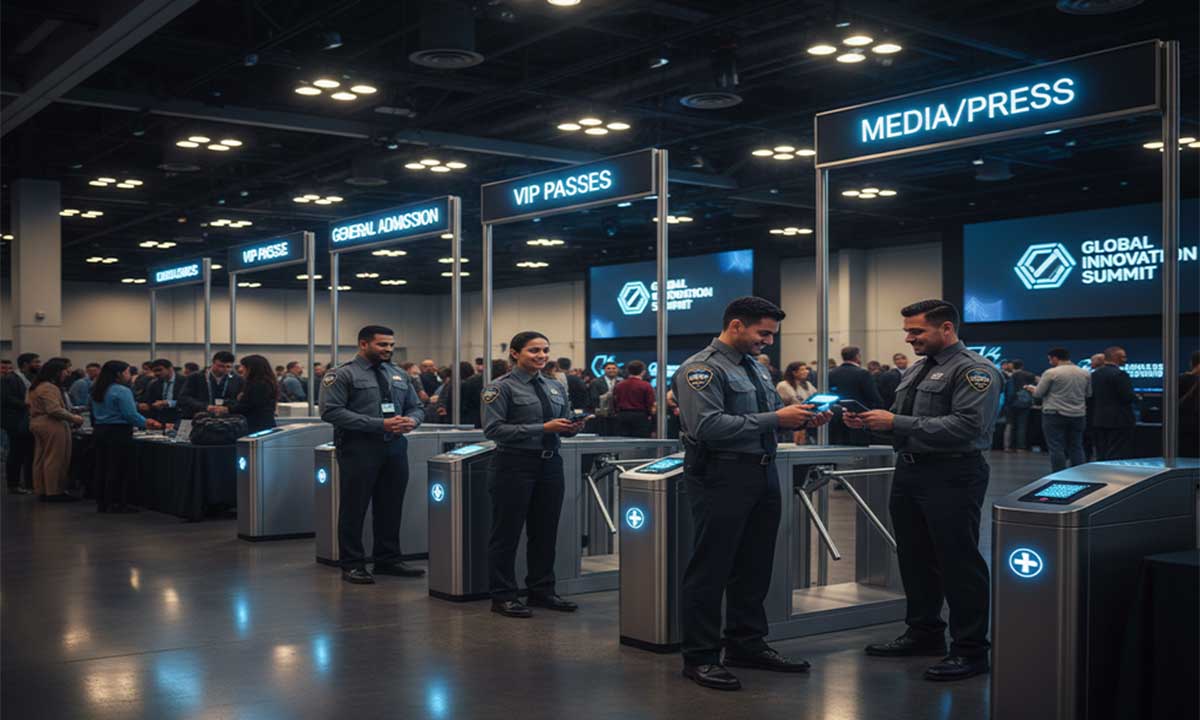
Event Security Tips for Large Gatherings

Essential Travel Gear for Business Conferences

Preparing Well for Business Conferences Abroad

Attending business conferences across different parts of the world offers professionals space to grow, learn, and build meaningful connections. Yet long before the first keynote or panel discussion begins, thoughtful preparation, much like planning high-end conferences, already plays a major role. What you bring with you can shape your comfort, focus, and overall performance. Being well prepared reflects respect for your time, your peers, and the opportunity itself.

Quick overview of what this article covers:

This guide explains why thoughtful preparation matters when traveling for business conferences. It reviews essential technology, personal comfort items, documents, and smart packing habits.

You will also learn how health, safety, and professional appearance influence your confidence and effectiveness during international events.

Why Careful Preparation Shapes Conference Success

Business conferences have become a regular part of professional life worldwide. They are spaces for sharing knowledge, forming partnerships, and staying informed about industry changes. These gatherings often bring together people from different cultures, time zones, and work styles. Because of this, preparation extends far beyond choosing outfits or booking flights.

Unexpected problems can disrupt even the most promising schedule. A drained laptop battery before a presentation or a missing document can quickly add stress. These moments distract from meaningful discussions and reduce focus. Proper planning, including crafting an efficient event schedule, reduces these risks. It allows you to give full attention to conversations, sessions, and new contacts.

Every item you pack supports your experience in some way. From reliable technology to personal care essentials and even custom travel accessories, each detail contributes to smoother days and clearer thinking. When logistics fade into the background, your professional presence becomes stronger and more consistent.

Technology Essentials for Staying Productive

Modern conferences depend heavily on digital tools. Presentations, communication, and note-taking often rely on personal devices. Protecting and supporting this equipment is a priority.

Protecting Laptops, Tablets, and Phones

Your laptop, tablet, and smartphone serve as your main work tools during a conference. They store files, slides, schedules, and contacts. Damage to any of these devices can interrupt your work and create avoidable pressure.

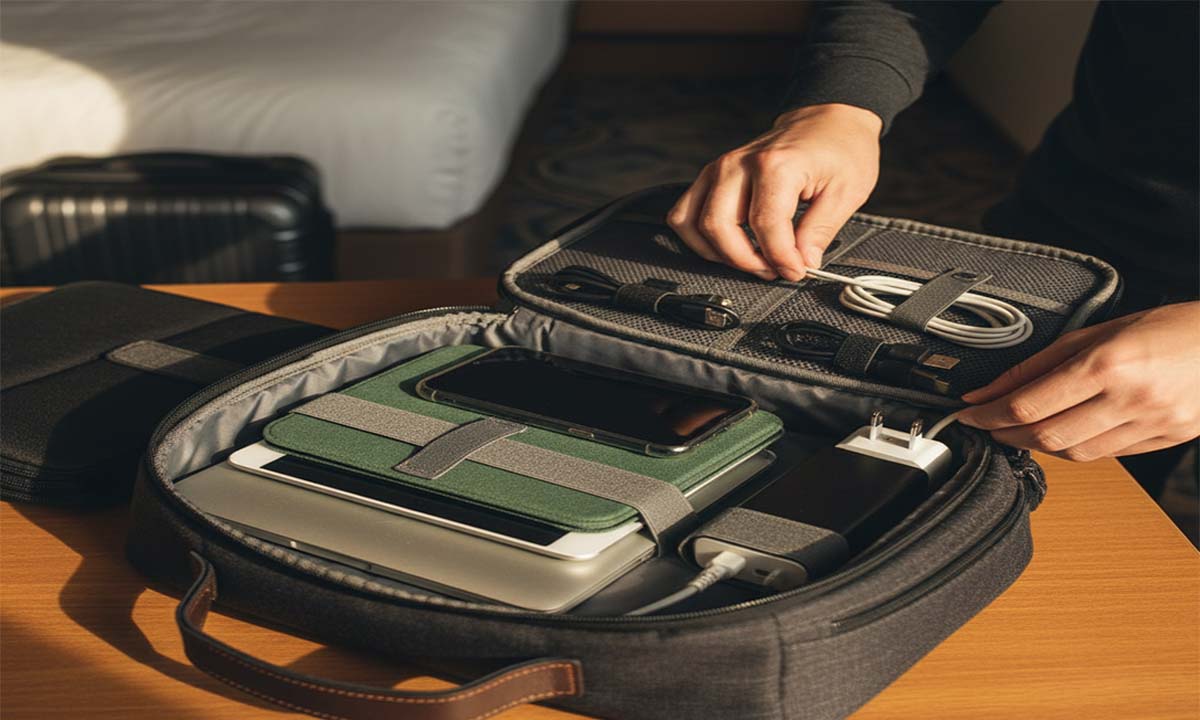
A well-padded laptop sleeve or bag helps shield your device from impact during transit. Tablets and phones benefit from screen protectors and durable cases. These small safeguards reduce the risk of cracks or scratches, especially during busy travel days. Losing access to essential data at a critical moment can affect both confidence and credibility.

Power Banks and International Adapters

Battery life often runs out at inconvenient times. Carrying a high-capacity power bank provides a dependable backup during long days. Make sure it is fully charged before leaving your hotel each morning.

International travel also requires attention to power outlets and voltage standards. A universal travel adapter supports charging across regions. Some models include surge protection, which helps prevent damage to sensitive electronics. Since voltage varies between countries, proper adapters help avoid technical issues while keeping devices ready for use.

Reliable Internet Access on the Go

Conference venues and hotels usually provide Wi-Fi, yet speed and stability differ. For important calls, file uploads, or secure work, having your own internet option adds reliability. A mobile hotspot or local SIM card allows more control over connectivity.

This approach also improves data security, which matters when handling work-related information. Stable access supports email responses, cloud documents, and virtual meetings that may continue during the event.

Comfort and Personal Wellbeing

Professional success during a conference depends not only on expertise but also on physical comfort and energy levels.

Choosing Comfortable Professional Clothing

Conference days often involve extended periods of standing, walking, and sitting. Clothing should balance formality and comfort. Wrinkle-resistant fabrics and layered outfits help adjust to different room temperatures.

Shoes deserve careful attention. Supportive footwear reduces fatigue, especially in large venues. When clothing feels comfortable, confidence tends to rise, making conversations and presentations feel more natural.

Personal Care Essentials

Maintaining personal hygiene helps you stay fresh and presentable throughout the day. A small kit with daily necessities such as deodorant, hand sanitizer, and oral care items fits easily into a carry-on or work bag.

Having familiar products on hand can be reassuring, particularly after long travel hours. Staying refreshed supports positive interactions and sustained focus.

Medications and Basic First Aid

Minor health issues sometimes appear during travel. Carrying common over-the-counter medication for headaches, colds, or digestion issues helps manage discomfort quickly. Prescription medication should be packed in your carry-on, with enough supply for the full trip.

A compact first aid kit with bandages and antiseptic wipes adds peace of mind. Being prepared for small issues allows you to recover quickly and stay engaged in conference activities.

Keeping Documents and Information Organized

Clear organization prevents delays and confusion during busy schedules.

Passports, Visas, and Travel Identification

For international events, your passport is the most critical document. Check its validity and available pages before departure. If a visa is required, complete the process well in advance.

Keeping digital and printed copies of important documents offers protection in case of loss. Store copies separately from the originals. This simple step can save time and stress if unexpected issues arise.

Flight, Hotel, and Event Details

Conference travel involves multiple bookings. Keeping your flight details, hotel confirmation, and event schedule accessible helps you stay on track. These can be stored digitally, printed, or both.

Clear access to this information supports smooth communication with airlines, hotels, and event staff. It also reduces confusion when schedules change or delays occur.

Notebook and Pen Still Matter

Digital tools dominate professional settings, yet pen and paper remain useful. A notebook allows quick note-taking during sessions or informal conversations. Writing by hand often improves memory and understanding.

Notebooks also serve as a reliable backup when devices are unavailable. Jotting down ideas, names, or action points becomes easier without relying on battery life or connectivity.

Presenting a Professional Image

Professionalism extends beyond spoken words. Appearance and preparation shape first impressions.

Planning Conference Attire

Selecting outfits ahead of time reduces stress during busy mornings. Clean, well-fitted clothing suited to the event’s cultural and professional setting helps you feel prepared.

Some conferences include formal dinners or networking events. Packing one or two polished outfits ensures readiness for these occasions. Thoughtful wardrobe planning supports confidence throughout the event.

Small Grooming Kit for Quick Fixes

A compact grooming kit can solve unexpected issues. Items such as a comb, safety pins, or a small mirror help manage last-minute adjustments.

These simple tools support a polished appearance even after long days. Feeling presentable often influences how confidently you engage with others.

Health and Safety While Traveling

Busy schedules and unfamiliar environments make health and safety a priority.

Snacks and Hydration

Conference agendas can limit access to balanced meals. Carrying healthy snacks such as nuts or protein bars helps maintain energy. A refillable water bottle encourages regular hydration.

Proper nutrition and hydration support alertness, mood, and focus during long sessions and discussions.

Protecting Personal Belongings

Crowded venues and transport hubs require awareness. Bags with secure closures reduce the risk of theft. Avoid keeping all valuables in one place.

Spreading cash and cards across different pockets or bags adds protection. These small habits help prevent disruptions and keep attention on professional goals.

Practical Packing Habits

Efficient packing improves mobility and reduces fatigue.

Using Packing Cubes for Organization

Packing cubes help separate clothing and accessories within your luggage. They make items easier to locate and maintain order throughout the trip.

This method also saves space, allowing you to pack efficiently without clutter. Staying organized simplifies daily routines while traveling.

Packing with Balance in Mind

Overpacking adds weight and stress. Planning outfits that mix and match reduces the number of items needed. Focus on essentials that serve multiple purposes.

Lighter luggage improves comfort and avoids additional airline fees. Thoughtful packing supports smoother movement between locations.

Staying Ready for Professional Opportunities

Preparing for a business conference shapes the entire experience. Careful planning supports productivity, comfort, and confidence. From protecting technology to organizing documents and maintaining wellbeing, each detail contributes to success.

When preparation is complete, attention shifts naturally to learning, conversation, and collaboration. Being ready allows you to engage fully and make the most of every opportunity presented during international conferences, keeping in mind the nuances of global business etiquette.