Event Security Tips for Large Gatherings
Ensuring Safety at Large-Scale Gatherings
Hosting a large gathering, such as an international conference, a global sporting event, or a major cultural festival, requires careful and thoughtful preparation. Above all, the safety of every attendee must remain the top priority. Any event, regardless of size, carries a responsibility to protect everyone present. When planning a high-end conference, for instance, safety becomes the paramount concern. From the earliest planning stages until the final guest leaves the venue, maintaining a secure environment plays a central role in the overall success of the occasion.
Strong preparation offers peace of mind for organizers and builds trust among attendees. People are more likely to engage, participate, and enjoy the experience when they feel protected and well-informed.
Quick Overview
In essence, large-scale events demand structured safety planning that begins long before opening day. This article outlines how risk assessment, coordination with authorities, access control, crowd management, and emergency readiness work together to create a secure environment. For those seeking a comprehensive blueprint for modern conference planning, it’s vital to see how these elements support ongoing improvement, helping future gatherings remain safe, efficient, and professionally managed.
Why Safety Planning Shapes Event Success
Safety planning is not an isolated task handled at the last minute. It forms the backbone of responsible event management. Whether the gathering takes place in Europe, Asia, the Americas, Africa, or the Middle East, the principles remain the same: identify potential risks, prepare realistic responses, and ensure everyone involved understands their role.
International events often attract diverse audiences, including public figures, media teams, and participants from multiple regions. This diversity adds complexity. Cultural expectations, language differences, and local regulations must all be taken into account. Clear planning helps bridge these gaps and supports a consistent standard of care across borders.
Early Risk Assessment as a Foundation
Every effective safety plan begins with a detailed risk assessment. This process examines possible threats, from minor disruptions to serious emergencies. The type of event plays a major role in shaping these risks. A global leadership summit faces different concerns than a music festival or a large public sports match.
Location also matters. Urban venues may face challenges linked to traffic flow, public access, or property security. Outdoor settings may introduce weather-related risks. Past incidents in the area, local crime patterns, and regional regulations should all be reviewed carefully.
For example, a technology conference held in a major European city may place emphasis on data protection, equipment security, and controlled access to restricted sessions. In contrast, a large sporting event in South America may focus more on crowd movement, public order, and perimeter control. Understanding these differences allows organizers to respond thoughtfully rather than react under pressure.
Building a Clear and Practical Security Plan
Once potential risks are identified, organizers must create a detailed security plan that serves as a working guide for all involved teams. This document should clearly outline responsibilities, reporting structures, and response procedures.
The plan should cover entry and exit management, surveillance systems, incident reporting, and emergency response steps. Evacuation routes must be clearly defined, well-marked, and accessible. Medical response procedures should include on-site support, coordination with nearby hospitals, and clear communication channels.
Sharing this plan with staff is just as important as creating it. Briefings, written guidelines, and scenario-based discussions help ensure everyone understands expectations. Regular updates should follow if conditions change, such as venue adjustments or attendance increases.
Coordination with Local Authorities
Strong cooperation with local authorities strengthens event security significantly. Police departments, fire services, and medical teams bring valuable expertise and resources that private organizers cannot replace.
Early meetings allow all parties to review the event layout, expected attendance, and possible challenges. This coordination ensures that emergency services can position personnel nearby and respond without delay if needed.
For instance, a large trade exhibition in the Middle East benefits from early coordination with municipal services. This approach allows traffic management plans to align with event schedules and ensures rapid medical response during peak hours. Open communication also supports timely information sharing if new concerns arise.
Choosing the Right Venue and Layout
Venue selection influences safety more than many organizers realize. Spaces with controlled entry points, clear sightlines, and flexible layouts are easier to manage. Poorly lit areas, hidden corners, or narrow corridors increase risk and complicate monitoring efforts.
A well-designed layout encourages smooth movement and reduces congestion. Wide walkways, visible signage, and clearly marked emergency exits support both comfort and safety. Adequate lighting improves visibility and helps staff identify potential issues early.
For example, a large academic conference held on a North American university campus benefits from planned pedestrian routes and strategically placed checkpoints. These measures reduce bottlenecks and support steady crowd flow throughout the day.
Managing Safety During the Event
Once the event begins, preparation shifts into active operation. Teams must remain alert, flexible, and ready to respond. Ongoing monitoring allows issues to be addressed before they escalate.
Controlled Access and Entry Management
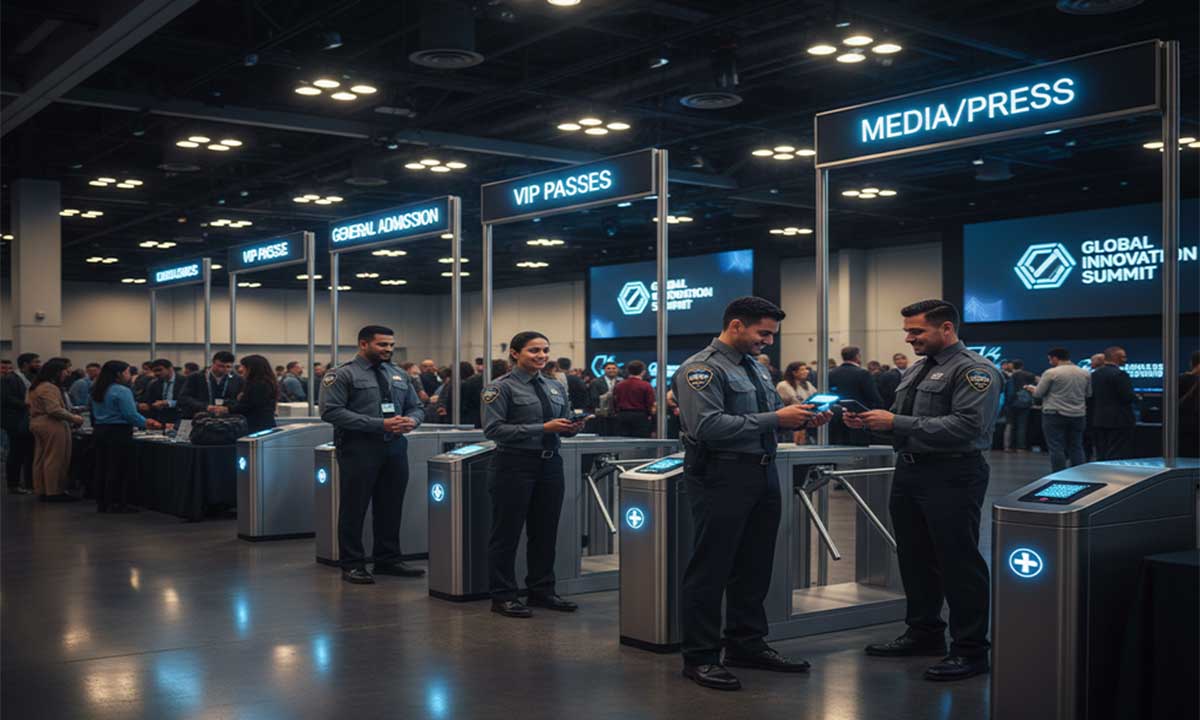
Managing who enters the venue forms a critical layer of protection. Many events rely on QR-coded tickets, RFID wristbands, or digital credentials. Bag checks and item screening add another safeguard, particularly at high-attendance gatherings.
Adequate staffing at entry points keeps lines moving and reduces frustration. Separate lanes for different ticket types or pre-registered guests help maintain order. These steps support both security and attendee experience.
Crowd Flow and Density Control
Crowd management focuses on movement, spacing, and atmosphere. Implementing effective crowd management strategies involves using barriers, directional signage, and trained staff to guide attendees and reduce confusion. Popular areas, such as main stages or keynote halls, require special attention.
In large music events held in Australia, for instance, organizers often plan staggered schedules and multiple access routes to reduce congestion. Monitoring tools that track crowd density can alert teams to rising pressure points, allowing timely intervention.
Ongoing Surveillance and Presence
Security cameras provide constant oversight of key areas, including entrances, exits, and gathering points. High-resolution systems positioned at strategic angles improve visibility and support quick decision-making.
In addition to technology, visible security staff play an important role. Their presence reassures attendees and offers a clear point of contact for questions or concerns. Large conventions in North America often rely on centralized command centers to coordinate surveillance, communication, and response teams efficiently.
Preparedness for Emergency Situations
Even with strong planning, unexpected situations may arise. Clear emergency procedures reduce confusion and support calm responses. Staff should know how to handle medical incidents, evacuations, or security threats without hesitation.
Regular drills help teams practice their roles and build confidence. For example, international sporting events in Europe often conduct evacuation simulations to test timing, communication, and coordination. Clear announcements during emergencies help prevent panic and guide attendees safely.
Reliable Communication Systems
Communication links all safety efforts together. Security teams require dependable tools such as two-way radios to share updates instantly. Public announcement systems allow organizers to address attendees quickly when guidance is needed.
Digital tools also play a growing role. At film festivals across Asia, mobile applications often provide real-time updates on schedules, safety notices, and venue changes. Screens displaying emergency messages add another layer of support.
Reviewing Outcomes After the Event
Safety responsibilities do not end when the venue clears. Post-event review provides valuable insight and supports long-term improvement.
Detailed Post-Event Evaluation
After the gathering, organizers should assess every aspect of security operations. Discussions should focus on what worked well, where delays occurred, and how incidents were handled. Input from security staff, medical teams, and venue managers enriches this review.
For example, a large business summit held at a Southeast Asian resort may examine delegate entry procedures, protection of high-profile guests, and response times for minor incidents. Documenting lessons learned strengthens future planning.
Applying Improvements for Future Events
Findings from the review should lead to concrete adjustments. These may include updated training, improved equipment, revised layouts, or additional staffing. This process keeps safety plans current and responsive to changing conditions.
Security remains an ongoing commitment rather than a single task. By treating each event as an opportunity to learn and refine processes, organizers support safer and more reliable experiences worldwide.
A Shared Responsibility for Safe Gatherings
Providing a safe environment at large-scale gatherings requires dedication, coordination, and careful execution. When safety stands at the center of planning, organizers create experiences that feel welcoming and secure. Attendees can focus on connection, learning, and enjoyment, confident that their well-being has been thoughtfully considered.