Is This Conference Worth It? Score ROI Using an Event ROI Calculator (Time + Money)
You open the conference agenda and start scanning the sessions. Familiar names appear. A few speakers stand out. The venue photos look polished and well staged. Then you reach the ticket price and pause. Add flights, hotels, meals, and days away from work, and the decision stops being simple. A conference can feel impressive on paper yet quietly drain resources once time and money are counted together.
This tension is common for professionals at every level. Conferences promise learning, exposure, and momentum. They also demand attention, energy, and commitment long before the doors open. Relying on instinct alone often leads to mixed feelings afterward. Clear thinking, grounded in numbers and expectations, offers a steadier path forward.
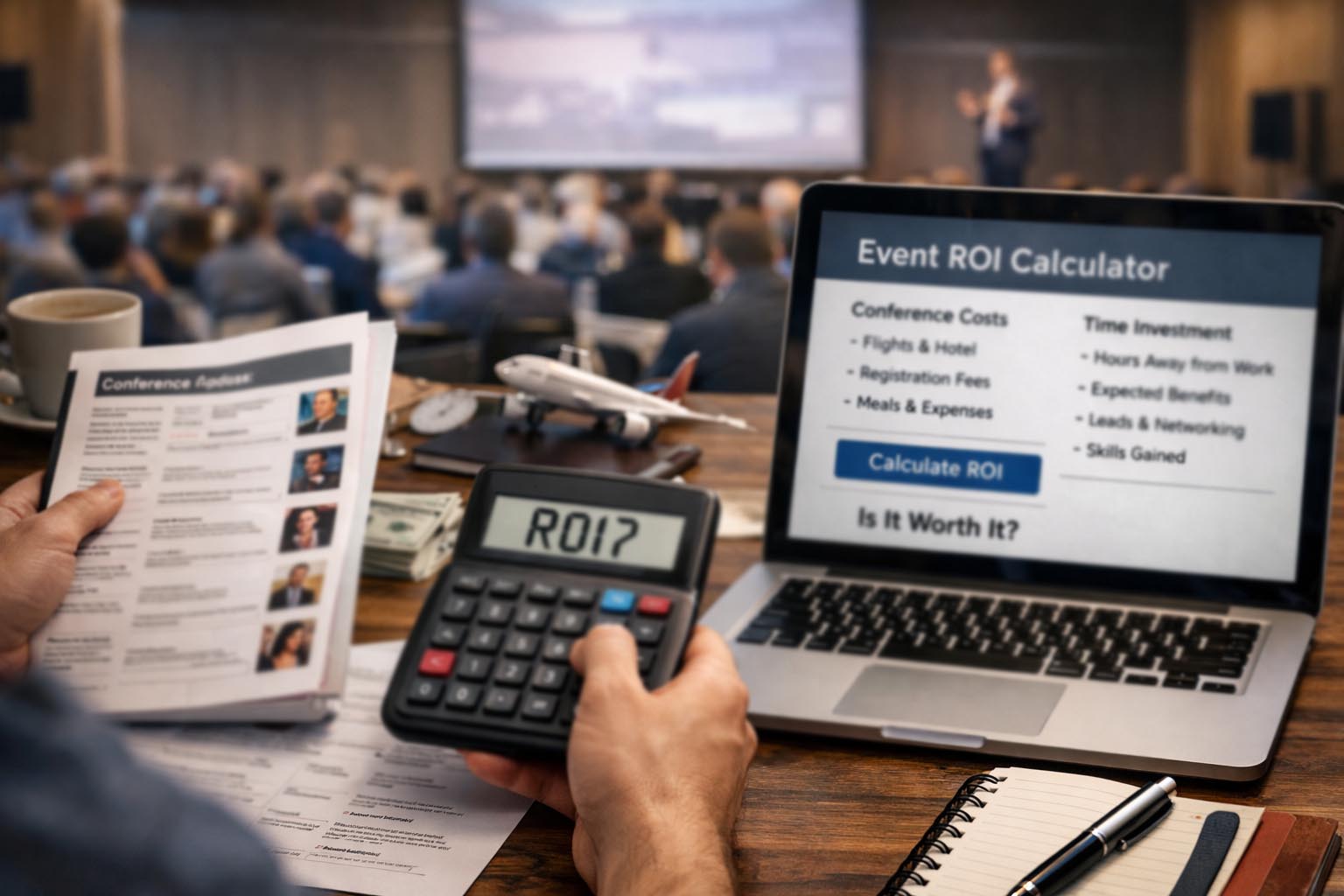
Using an event ROI calculator early changes how the decision unfolds. Instead of asking whether the event sounds worthwhile, you start asking what it must deliver to justify the investment. Every assumption becomes visible. Registration fees, travel time, accommodation, and hours spent on site are no longer abstract. They become inputs that shape a real decision.
Quick Summary
- Conference ROI includes money, time, and opportunity cost.
- Breaking inputs into clear parts improves decision quality.
- Measurement creates confidence before and after the event.
What ROI Really Means for Conferences
ROI is often reduced to a simple financial ratio. That narrow view works for equipment or advertising spend.
Conferences operate differently. Their value often appears through insight gained, relationships built, and clarity earned over time. Ignoring these elements misses a large part of the return.
At the same time, softer outcomes should not excuse vague thinking. Knowledge has value when it changes decisions. Connections matter when they lead to collaboration or opportunity. Momentum counts when it carries into real action after the event. A complete ROI view weighs these benefits against what they cost to obtain.
This balanced approach mirrors how experienced planners evaluate outcomes after the doors close. Clear metrics make reflection grounded rather than emotional. The same logic is reflected in conference success measurement, where planning goals and post event review reinforce each other. When expectations and evaluation share the same framework, results become easier to judge.
Breaking Down the True Cost Side
Conference costs are rarely obvious at first glance. They arrive in fragments, spread across weeks or months.
A ticket fee feels manageable on its own. So does a hotel night or a single flight. Together, they form a much larger commitment than expected.
Many attendees underestimate how quickly small expenses accumulate. Meals between sessions, local transport, and incidental purchases add up. More importantly, work pauses while attention shifts elsewhere. That pause carries a cost even if no invoice arrives.
The most commonly overlooked cost categories include the following.
- Registration fees, workshops, and add on sessions.
- Flights, trains, taxis, and accommodation.
- Meals outside sponsored or scheduled events.
- Work hours delayed, delegated, or postponed.
Time acts as the quiet multiplier. A three day conference often consumes closer to a full work week once preparation, travel, and follow up are included. Emails stack up. Projects slow. That hidden time cost deserves the same attention as visible expenses.
Estimating the Return Without Guesswork
Returns feel harder to quantify because they often depend on behavior after the event. That does not make them unmeasurable. It simply means they require clearer goals at the start. Attending to generate sales leads differs from attending to refine skills or build industry awareness. Each goal carries a different return profile.
Define success before you register. A consultant may value two strong client conversations. A manager may value clarity on a strategic decision. A founder may value exposure to potential partners. Without this clarity, even a productive event can feel disappointing afterward.
This is where a free online calculator becomes practical rather than abstract. Assigning reasonable values to expected outcomes turns hopes into estimates. The numbers will never be perfect. They do not need to be. They only need to be honest enough to guide a choice.
This discipline mirrors how experienced teams approach planning. They test assumptions before committing resources. The same principle appears in event budget planning, where visibility allows adjustments before costs lock in. Clarity early prevents frustration later.
A Practical ROI Scoring Framework
Once costs and potential returns are laid out, scoring becomes manageable. The goal is not to predict the future with precision. The goal is to compare scenarios with consistency. This comparison often reveals patterns that instinct alone would miss.
Use the following numerical structure as a working framework.
Adjust it to fit your role and priorities.
1. Assign a realistic monetary value to your time per hour, based on salary or billable rates.
2. Estimate total hours spent preparing, attending, traveling, and following up.
3. Combine all direct expenses into a single cost figure.
4. Estimate gains conservatively, focusing on outcomes you can influence.
5. Compare totals and observe the margin rather than chasing precision.
A positive margin suggests potential alignment. A negative margin signals caution. Neither guarantees an outcome. Both provide guidance grounded in reality.
ROI Factors That Are Easy to Miss
Some benefits surface weeks or months later. A brief conversation may spark a collaboration long after badges are discarded. That delayed return does not justify attending every event. It highlights the role of disciplined follow up.
Without follow through, even strong connections fade.
Energy and focus also influence ROI more than many expect. Long days filled with sessions can reduce attention.
Decision quality drops as fatigue builds. What looks productive on a schedule may feel overwhelming in practice.
Thoughtful pacing protects value. Session timing and breaks shape how information is absorbed. Insights from efficient event schedules show how structure affects outcomes. Attention is a finite resource. Protecting it improves returns.
Sample ROI Comparison Table
| Category | Conference A | Conference B |
|---|---|---|
| Total Cost | SGD 3,200 | SGD 1,800 |
| Time Investment | 42 hours | 28 hours |
| Estimated Return | SGD 4,500 | SGD 3,000 |
Why Measurement Builds Confidence
Clear numbers reduce emotional weight. You stop feeling pressure to attend events simply because others are going.
Skipping a conference feels easier when the reasoning is clear. Committing feels stronger when the math supports it.
ROI thinking also protects focus. Instead of scattering attention across multiple events, you concentrate on those that align with real goals. Over time, this focus compounds. Energy is spent where it matters most.
Formal ROI frameworks are widely accepted across industries. Even the basic definition of return on investment reinforces the same logic. Input and output must be compared honestly. The principle holds whether the asset is equipment, marketing, or time.
Making the Decision With Clarity
Conferences remain powerful tools when chosen deliberately. They become costly distractions when selected on impulse. Preparation shapes the difference.
By scoring time and money together, you replace vague optimism with structure. That structure does not remove uncertainty. It removes regret and second guessing.
The next invitation that lands in your inbox deserves a pause. Run the numbers. Check the assumptions. If the value holds, attend with confidence. If it does not, your calendar gains space for work that matters more.