Your cart

Is This Conference Worth It Score ROI Using an Event ROI Calculator (Time + Money)

Is This Conference Worth It? Score ROI Using an Event ROI Calculator (Time + Money)

You open the conference agenda and start scanning the sessions. Familiar names appear. A few speakers stand out. The venue photos look polished and well staged. Then you reach the ticket price and pause. Add flights, hotels, meals, and days away from work, and the decision stops being simple. A conference can feel impressive on paper yet quietly drain resources once time and money are counted together.

This tension is common for professionals at every level. Conferences promise learning, exposure, and momentum. They also demand attention, energy, and commitment long before the doors open. Relying on instinct alone often leads to mixed feelings afterward. Clear thinking, grounded in numbers and expectations, offers a steadier path forward.

Using an event ROI calculator early changes how the decision unfolds. Instead of asking whether the event sounds worthwhile, you start asking what it must deliver to justify the investment. Every assumption becomes visible. Registration fees, travel time, accommodation, and hours spent on site are no longer abstract. They become inputs that shape a real decision.

Quick Summary

  • Conference ROI includes money, time, and opportunity cost.
  • Breaking inputs into clear parts improves decision quality.
  • Measurement creates confidence before and after the event.

What ROI Really Means for Conferences

ROI is often reduced to a simple financial ratio. That narrow view works for equipment or advertising spend.
Conferences operate differently. Their value often appears through insight gained, relationships built, and clarity earned over time. Ignoring these elements misses a large part of the return.

At the same time, softer outcomes should not excuse vague thinking. Knowledge has value when it changes decisions. Connections matter when they lead to collaboration or opportunity. Momentum counts when it carries into real action after the event. A complete ROI view weighs these benefits against what they cost to obtain.

This balanced approach mirrors how experienced planners evaluate outcomes after the doors close. Clear metrics make reflection grounded rather than emotional. The same logic is reflected in conference success measurement, where planning goals and post event review reinforce each other. When expectations and evaluation share the same framework, results become easier to judge.

Breaking Down the True Cost Side

Conference costs are rarely obvious at first glance. They arrive in fragments, spread across weeks or months.
A ticket fee feels manageable on its own. So does a hotel night or a single flight. Together, they form a much larger commitment than expected.

Many attendees underestimate how quickly small expenses accumulate. Meals between sessions, local transport, and incidental purchases add up. More importantly, work pauses while attention shifts elsewhere. That pause carries a cost even if no invoice arrives.

The most commonly overlooked cost categories include the following.

  • Registration fees, workshops, and add on sessions.
  • Flights, trains, taxis, and accommodation.
  • Meals outside sponsored or scheduled events.
  • Work hours delayed, delegated, or postponed.

Time acts as the quiet multiplier. A three day conference often consumes closer to a full work week once preparation, travel, and follow up are included. Emails stack up. Projects slow. That hidden time cost deserves the same attention as visible expenses.

Estimating the Return Without Guesswork

Returns feel harder to quantify because they often depend on behavior after the event. That does not make them unmeasurable. It simply means they require clearer goals at the start. Attending to generate sales leads differs from attending to refine skills or build industry awareness. Each goal carries a different return profile.

Define success before you register. A consultant may value two strong client conversations. A manager may value clarity on a strategic decision. A founder may value exposure to potential partners. Without this clarity, even a productive event can feel disappointing afterward.

This is where a free online calculator becomes practical rather than abstract. Assigning reasonable values to expected outcomes turns hopes into estimates. The numbers will never be perfect. They do not need to be. They only need to be honest enough to guide a choice.

This discipline mirrors how experienced teams approach planning. They test assumptions before committing resources. The same principle appears in event budget planning, where visibility allows adjustments before costs lock in. Clarity early prevents frustration later.

A Practical ROI Scoring Framework

Once costs and potential returns are laid out, scoring becomes manageable. The goal is not to predict the future with precision. The goal is to compare scenarios with consistency. This comparison often reveals patterns that instinct alone would miss.

Use the following numerical structure as a working framework.
Adjust it to fit your role and priorities.

1.  Assign a realistic monetary value to your time per hour, based on salary or billable rates.

2. Estimate total hours spent preparing, attending, traveling, and following up.

3. Combine all direct expenses into a single cost figure.

4. Estimate gains conservatively, focusing on outcomes you can influence.

5. Compare totals and observe the margin rather than chasing precision.

A positive margin suggests potential alignment. A negative margin signals caution. Neither guarantees an outcome. Both provide guidance grounded in reality.

ROI Factors That Are Easy to Miss

Some benefits surface weeks or months later. A brief conversation may spark a collaboration long after badges are discarded. That delayed return does not justify attending every event. It highlights the role of disciplined follow up.
Without follow through, even strong connections fade.

Energy and focus also influence ROI more than many expect. Long days filled with sessions can reduce attention.
Decision quality drops as fatigue builds. What looks productive on a schedule may feel overwhelming in practice.

Thoughtful pacing protects value. Session timing and breaks shape how information is absorbed. Insights from efficient event schedules show how structure affects outcomes. Attention is a finite resource. Protecting it improves returns.

Sample ROI Comparison Table

Category Conference A Conference B
Total Cost SGD 3,200 SGD 1,800
Time Investment 42 hours 28 hours
Estimated Return SGD 4,500 SGD 3,000

Why Measurement Builds Confidence

Clear numbers reduce emotional weight. You stop feeling pressure to attend events simply because others are going.
Skipping a conference feels easier when the reasoning is clear. Committing feels stronger when the math supports it.

ROI thinking also protects focus. Instead of scattering attention across multiple events, you concentrate on those that align with real goals. Over time, this focus compounds. Energy is spent where it matters most.

Formal ROI frameworks are widely accepted across industries. Even the basic definition of return on investment reinforces the same logic. Input and output must be compared honestly. The principle holds whether the asset is equipment, marketing, or time.

Making the Decision With Clarity

Conferences remain powerful tools when chosen deliberately. They become costly distractions when selected on impulse. Preparation shapes the difference.

By scoring time and money together, you replace vague optimism with structure. That structure does not remove uncertainty. It removes regret and second guessing.

The next invitation that lands in your inbox deserves a pause. Run the numbers. Check the assumptions. If the value holds, attend with confidence. If it does not, your calendar gains space for work that matters more.

Conference Prep Countdown The Exact Timeline for Proposals, Flights, and Early-Bird Deadlines

Conference Prep Countdown: The Exact Timeline for Proposals, Flights, and Early-Bird Deadlines

Conference planning rarely fails because of ideas. It fails because of timing. A strong proposal submitted one day late does not get reviewed. A flight booked after prices spike eats into budgets. An early bird ticket missed by hours can add stress that lingers for months. The smartest planners treat time as a moving structure, not a fixed date on a calendar. They measure what has already passed and what still lies ahead.

Every serious conference plan starts with clarity around three questions. How long until the proposal deadline closes. How much time remains before the event begins. How long it has been since registration opened. These gaps define priorities and shape decisions long before anyone steps into a venue.

At a Glance

This article breaks conference preparation into clear countdown phases. It shows how proposal windows, registration periods, and travel planning all depend on knowing exact time spans rather than guessing dates.

Starting With the Clock, Not the Checklist

Most conference timelines begin with tasks. Write proposal. Book flights. Register team. That order looks tidy but hides the real driver. Deadlines move forward whether preparation feels ready or not. Starting with time creates urgency where it belongs and removes panic from everything else.

A proposal deadline five weeks away feels generous until daily work eats into those weeks. Knowing the exact remaining duration changes behavior. A precise countdown turns vague intention into scheduled effort. This is why planners rely on a time from now calculator early in the process. It converts dates into reality.

Proposal Windows and Submission Rhythm

Calls for papers often open quietly. Weeks pass before most people notice. By the time urgency appears, review windows are already narrowing. Tracking how long it has been since a proposal window opened provides context. It signals how crowded the review pipeline may already be.

A submission sent early gains breathing room. Reviewers read with more attention. Revisions remain possible. Late submissions compete with volume and fatigue. Time awareness encourages earlier drafts and calmer edits.

  1. Identify the official proposal opening date.
  2. Measure how much time has passed since that opening.
  3. Count the remaining days before closure.

Spacing these steps across days instead of hours leads to clearer writing and stronger positioning. Many planners refine their drafts using principles from proposal engagement assessment, well before submission pressure builds.

Registration Phases and Price Psychology

Registration is more than a payment step. It signals commitment. Early bird phases exist to reward decisiveness. Missing them rarely changes attendance but almost always changes cost. Understanding how long it has been since registration opened helps teams judge whether prices are likely to rise soon.

If registration opened months ago, demand patterns are already forming. Hotels begin filling. Workshops reach capacity. Late registration creates friction that spills into travel and accommodation planning.

Clear timing also improves internal communication. Teams respond better to statements grounded in time rather than emotion. Saying registration closes in nine days creates focus. Saying soon does not.

Flight Booking Windows That Protect Budgets

Flights sit at the intersection of time and money. Book too early and schedules may shift. Book too late and prices climb fast. The optimal window depends on distance, season, and destination.

Counting down to the event start date anchors flight decisions. International conferences require wider buffers. Regional events allow more flexibility. The key is measuring exact intervals instead of relying on instinct.

Travel TypeIdeal Booking WindowRisk if Delayed
International long haul8 to 12 weeks before eventSharp fare increases
Regional flights4 to 6 weeks before eventLimited seat choice
Domestic travel2 to 4 weeks before eventHigher peak pricing

These windows are easier to manage when aligned with session layouts and arrival flows described in efficient conference scheduling.

Counting Down to the Event Start

The moment the event date is fixed, a new countdown begins. This clock governs everything that follows. Speaker preparation. Travel documents. On site materials. Each task ties back to the same endpoint.

Measuring how long until the event starts shifts planning from abstract to tangible. A six month horizon allows experimentation. A three week horizon demands execution. Knowing where you stand prevents unrealistic planning.

This awareness also helps attendees pace energy. Packing lists feel lighter when spread across time. Rehearsals feel less forced when scheduled earlier.

Time Blocks That Reduce Stress

Breaking preparation into time blocks creates rhythm. Each block serves one purpose. Proposal writing ends before travel planning begins. Registration confirmation closes before presentation polish starts.

This separation reduces overlap fatigue. It also creates checkpoints that feel achievable. Instead of one overwhelming timeline, planners work through clear phases.

  • Proposal phase with submission buffer.
  • Registration confirmation phase.
  • Travel booking and logistics phase.
  • Content rehearsal and material prep phase.

Well defined blocks align closely with approaches discussed in conference time management, where pacing often determines outcomes more than raw effort.

Why Exact Timing Beats Memory

Serious events rely on shared structure, not personal reminders. Large conferences follow formal planning cycles that define when proposals close, when registrations stabilize, and when logistics must lock in. This kind of discipline mirrors established event planning standards, where timelines exist to reduce risk and avoid last minute decisions.

Memory fades. Emails get buried. Dashboards refresh daily. Exact time measurement cuts through noise. It removes reliance on recall and replaces it with facts.

Turning Countdowns Into Confidence

Time awareness creates calm. Knowing where you stand removes second guessing. A clear countdown turns preparation into a sequence rather than a scramble.

Conference success often appears effortless from the outside. Behind that ease sits careful timing. Proposals sent with days to spare. Flights booked before prices jump. Registrations confirmed without rush.

Treat time as a partner. Measure it. Respect it. Let each countdown guide your next move with confidence rather than pressure.

Planning Hybrid Conferences for Global Audiences Without Timing Errors

Planning Hybrid Conferences for Global Audiences Without Timing Errors

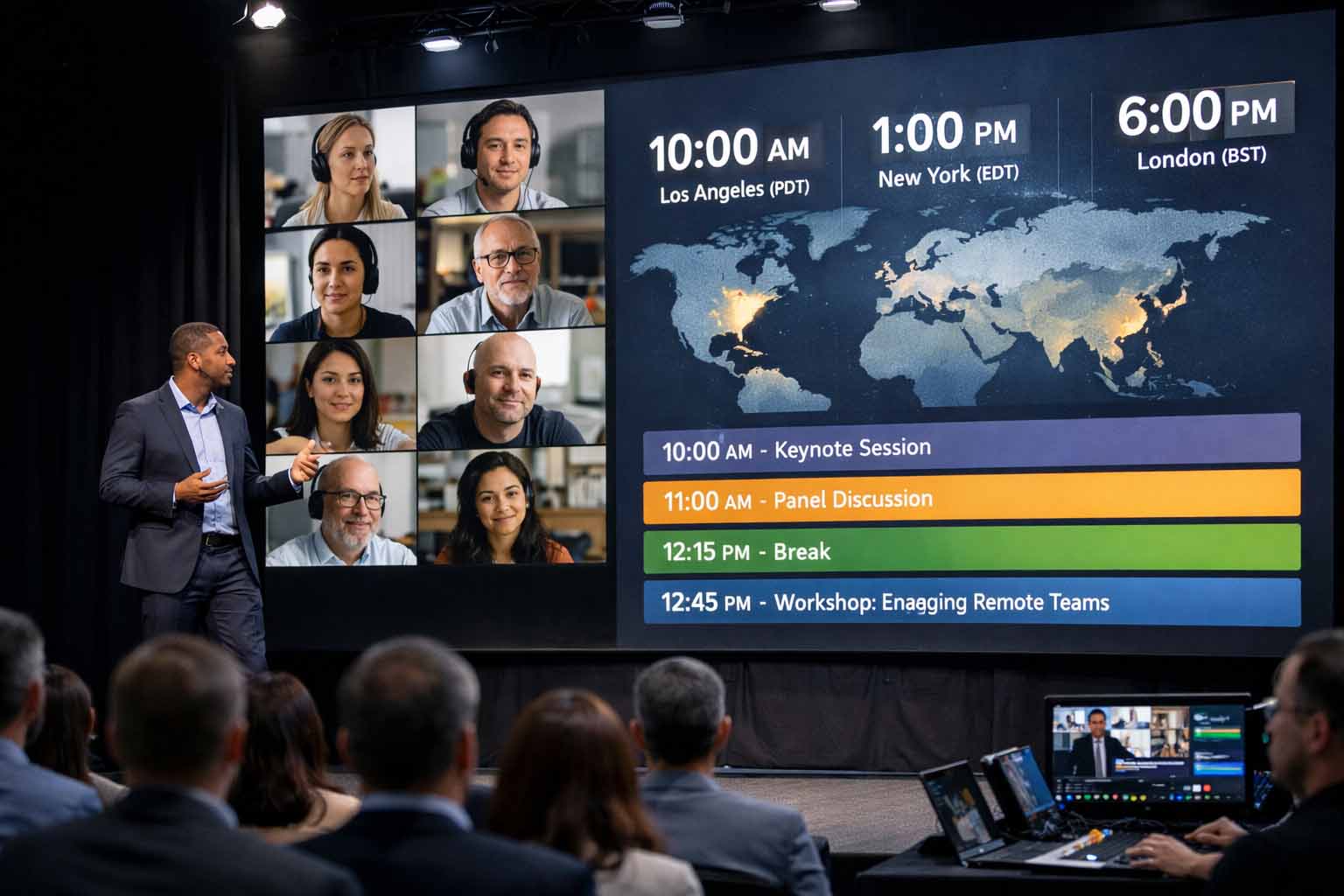
Hybrid conferences promise reach and flexibility, but they also expose weaknesses in planning that rarely surface in fully in person events. Time sits at the center of those weaknesses. A single agenda now has to function across continents, working hours, and personal routines. If timing feels careless, the entire experience feels fragile, even if the content itself is strong.

Unlike physical conferences, hybrid events do not allow attendees to drift in and out unnoticed. A remote participant joins at a specific moment with a clear expectation. If nothing happens, frustration sets in fast. That emotional response does not reset easily. Once trust is shaken, engagement drops, cameras turn off, and chat activity slows.

For conferences that involve speakers or partners across multiple regions, checking the current time in different regions gives planners a reliable, real world reference that automatically reflects daylight changes and seasonal shifts. Relying on a live time source instead of rough offsets helps teams align rehearsals, speaker briefings, and live sessions with greater confidence and far fewer assumptions.

This habit fits naturally alongside broader scheduling thinking discussed in best conference timing. Time decisions shape who can attend, how alert they feel, and whether the event respects their daily rhythm. When time is treated as a strategic choice rather than an afterthought, the entire program gains stability.

Why Hybrid Conferences Magnify Timing Problems

In person conferences have built in forgiveness. Attendees gather early. Conversations stretch between rooms. Coffee breaks absorb small delays. Hybrid events remove those buffers completely. A remote attendee logs in at the published time expecting immediate value. Even a short delay feels longer when someone is staring at a silent screen.

Timing errors also create visible stress for speakers and moderators. When one session runs late, the pressure moves downstream. Moderators shorten introductions. Speakers rush slides. Question segments disappear. Viewers notice the tension even if it is never acknowledged.

Another issue is perceived fairness. Hybrid audiences span regions, and patterns become obvious over time. If live sessions always favor one time zone, others quietly disengage. Registration numbers decline in those regions, not because the content is poor, but because participation feels inconvenient or dismissive.

Selecting Time References That Everyone Understands

Global events require a clear and consistent time reference. This does not mean forcing everyone into one local time. It means choosing a primary anchor and communicating it without ambiguity. Confusion often arises when schedules mix formats or rely on mental conversion.

North American time zones cause particular trouble, especially around seasonal changes. Referring directly to PST time reduces misinterpretation and prevents calendar conflicts. It also limits last minute emails asking speakers to confirm when they are actually expected to join.

This approach reflects principles outlined in precise timing tools, where consistency outweighs clever formatting. Attendees do not want elegance or novelty in schedules. They want certainty and reliability.

Designing Schedules That Match Human Energy

Time planning is not only about clocks and conversions. It is about attention. Remote audiences fatigue faster than in person ones. Screens demand constant focus. Distractions are always within reach. Schedules that ignore these realities lose engagement quickly.

Shorter sessions consistently perform better online. A forty minute block feels focused and achievable. Sixty minutes pushes attention. Anything longer requires exceptional delivery to hold interest. Breaking content into tighter segments gives attendees natural moments to reset.

Breaks deserve equal care. Online breaks are not filler. They allow people to stand up, rest their eyes, and process information. Clear labeling matters. A scheduled pause feels intentional and reassuring. An unexplained gap feels like a technical issue.

Guidelines That Support Remote Engagement

  • Keep live sessions concise and purpose driven
  • Rotate premium time slots across regions
  • Provide recordings shortly after sessions end
  • Display session times in multiple regions clearly

Using Numbers to Reduce Schedule Risk

Numerical rules bring discipline to creative planning. They force difficult choices early and prevent optimistic assumptions from creeping into the agenda. Numbers also protect teams from exhaustion during long events.

Clear numerical constraints help prevent cascading delays that damage the overall experience.

1. Leave at least fifteen minutes between live sessions for technical resets, speaker transitions, and unexpected issues.

2. Limit total live programming to six hours per day to protect attention and energy across regions.

3. Schedule speaker rehearsals a full day before live delivery to identify timing and technical problems early.

These figures are based on repeated observation across large hybrid conferences. They are not arbitrary limits. They reflect human and technical capacity.

Making Time Visible Across Teams

Time communication works best when it is visual. Written schedules are easy to misread under pressure. Visual cues reduce cognitive load and speed up decision making during live operations.

Color coding by region, role, or session type allows staff to understand priorities instantly. Speakers know when they are live. Moderators know when to prepare. Producers know when to reset equipment and feeds.

Region Reference Zone Preferred Live Window
Asia Pacific SGT 09:00 to 15:00
Europe CET 10:00 to 16:00
North America PST 08:00 to 14:00

Speaker Experience Shapes Event Quality

Speakers carry the emotional weight of hybrid conferences. Their comfort level directly affects delivery quality. Unclear timing adds stress that audiences can sense immediately.

Personalized schedules help. Each speaker should receive a version that includes only their sessions, rehearsal times, and backup contacts. Showing everything increases confusion rather than clarity.

Including local time reduces mental effort. Confirming schedules multiple times may feel repetitive, but it prevents last minute panic. These practices align with ideas shared in session timing precision, where preparation is treated as part of performance.

Technology That Reinforces Shared Awareness

Tools do not replace good planning, but they reinforce shared awareness. Live clocks, countdowns, and synchronized timers help teams operate as a unit. Questions about timing disappear, replaced by focused execution.

Platforms that show current time across cities also help new team members integrate faster. Everyone sees the same reference without asking. That shared understanding reduces friction during live delivery.

For background on why offsets change and why manual conversion fails, the time zone overview explains how global standards work and why assumptions lead to errors.

Event Summary

Hybrid conferences succeed when time is treated as a design element rather than a technical detail. Clear reference zones, realistic session lengths, visible schedules, and consistent communication prevent errors and protect trust across regions.

Consistency Builds Long Term Confidence

Attendees rarely praise good timing openly. They simply notice when it is missing. Smooth schedules feel invisible. That invisibility signals competence and care.

When hybrid events respect time across continents, participation stabilizes. Speakers agree to return. Audiences stay attentive. Word spreads quietly through reliability rather than promotion.

Planning hybrid conferences for global audiences without timing errors is not about perfection. It is about respect. That respect appears in every schedule shared, every rehearsal held, and every session that begins exactly as promised.

Top Business Laptops for Conference Attendees

Top Business Laptops for Conference Attendees

Choosing the Right Laptop for Business Conferences

In business gatherings, preparation goes far beyond carrying business cards and wearing polished attire. Attending a conference, whether a global industry summit or a focused professional forum, demands sustained productivity across long hours. For those involved in planning a high-end conference, the importance of every detail is clear. Every presentation, workshop, and networking session relies on one central tool: your laptop. It functions as a mobile office, an information hub, and a channel for professional interaction. Selecting the right laptop is not only about raw power. It comes down to dependability, efficiency, and how well the device fits into a demanding schedule that moves quickly.

Quick Overview

A laptop built for conferences should support professionals through full days of work without interruption. Lightweight construction, long battery life, and consistent performance form the foundation of a reliable device.

Connectivity, data protection, and comfort also matter. Strong wireless support, practical ports, secure access features, and a screen and keyboard designed for extended use all shape a smoother conference experience.

Why the Right Laptop Matters at Conferences

Conference participation often means handling several tasks at once. You may need to record key points from a session, revise slides for an upcoming talk, respond to urgent messages, or finalize a report between meetings. In these settings, a laptop becomes an extension of your professional capability. It allows you to stay responsive and organized in environments filled with movement and shifting schedules.

An unreliable device can disrupt this flow. Slow startup times, frozen applications, or sudden battery loss can lead to stress and lost opportunities. Such moments may affect not only your focus but also how others perceive your professionalism. A dependable laptop removes these concerns. It provides stability, allowing attention to stay on learning, collaboration, and how to foster meaningful networking, rather than technical setbacks.

Key Factors to Consider When Selecting a Conference Laptop

Choosing a laptop for conferences requires thoughtful evaluation. The following factors help ensure the device meets both practical needs and professional expectations.

Portability and Build Quality

Conference attendees often travel across cities or countries, moving between venues, hotels, and airports. Weight and size play a major role in daily comfort. A slim, lightweight laptop fits easily into a bag and feels manageable during long walks or tight schedules.

Durability also matters. A strong chassis helps protect the device from bumps during transit. Professionals who travel frequently benefit from laptops built with materials such as aluminum or reinforced composites, which balance strength and manageable weight. A clean, modern design also supports a professional image in meeting rooms and shared workspaces.

Battery Life for Long Workdays

Battery performance ranks among the most valued features at conferences. Power outlets may be scarce or inconveniently located. A laptop that lasts through a full day of sessions reduces dependence on charging stations and adapters.

Fast-charging support can also prove useful. Gaining several hours of use from a short charging window helps during brief breaks. Reliable battery performance offers flexibility, whether working from a lounge area, preparing notes between talks, or staying productive during travel.

Smooth Performance for Daily Tasks

Consistent performance ensures that work continues without delay. Modern processors support multitasking, allowing multiple browser tabs, presentation software, and communication tools to run at the same time. Adequate memory, commonly 8GB or 16GB, supports this workflow and keeps applications responsive.

Storage type also affects daily use. Solid State Drives load systems and files faster than traditional drives and improve overall responsiveness. They also add resilience, as they lack moving parts. Sufficient storage capacity supports document libraries, presentation files, and media needed throughout the event.

Connectivity and Essential Ports

Conferences often require connections to external displays, projectors, and various peripherals. A practical selection of ports supports smooth setup. USB-C allows fast data transfer and charging, while standard USB ports remain useful for accessories. Display outputs support presentations without last-minute complications.

Wireless performance remains just as important. Stable Wi-Fi and Bluetooth connections support cloud access, video calls, and device pairing. Strong connectivity keeps work flowing, even in busy venues with many connected users.

Data Protection and Privacy

Public venues increase the need for data security. Features such as fingerprint readers or facial recognition offer secure access without slowing down workflow. Hardware-based security components support data protection at a deeper level.

Software practices also matter. Disk encryption, system updates, and strong passwords help protect sensitive files. Physical awareness remains part of security as well, especially in shared spaces where devices may be left unattended.

Display and Keyboard Comfort

Extended screen time calls for a display that supports eye comfort. High-resolution screens with glare reduction support long reading and editing sessions. Clear visuals also help during presentations and collaborative reviews.

A responsive keyboard supports faster note-taking and report writing. Backlit keys improve usability in low-light environments, such as dim conference halls. Screen size presents a trade-off between workspace and portability, making personal workflow preferences an important consideration.

Common Features Worth Having

  • Durable construction for frequent travel
  • Reliable wireless performance
  • Clear webcam quality for remote sessions
  • Quiet cooling systems that suit shared environments

Understanding Laptop Categories for Professional Use

The current market offers several laptop categories designed for different work styles. Knowing these distinctions helps narrow the search.

Ultralight Models for Frequent Travelers

Ultralight laptops suit professionals who move often. Their low weight and compact form reduce travel fatigue. Despite their size, many offer strong battery life and dependable performance. These devices support work in transit, from airport lounges to hotel desks, without sacrificing essential functionality.

Performance-Focused Laptops for Intensive Work

Some roles require greater processing capability. Tasks such as media editing, design work, or advanced data analysis benefit from stronger processors and expanded memory. These laptops may weigh more, yet they deliver speed and stability for demanding sessions and technical workshops.

Convertible Devices for Flexible Use

Convertible laptops combine laptop and tablet functions. This format supports handwritten notes, quick sketches, and interactive presentations. Switching between modes allows adaptation to different conference scenarios, from seated sessions to small group discussions.

Supporting Productivity with Software and Accessories

Hardware forms the base, but software and accessories complete the setup. Productivity tools for writing, data management, and presentations support daily tasks. Cloud storage services add backup and allow access across devices.

Accessories also improve comfort and security. A compact mouse supports precision work. Privacy screens help protect on-screen information. External power sources add reassurance during long days. A well-organized bag, along with other essential travel gear, keeps everything accessible and protected.

Keeping Your Laptop Ready for Conferences

Preparation before travel reduces risk. System updates help avoid compatibility and security issues. Removing unused files supports faster performance. Backing up data ensures access even if problems arise.

During events, care helps preserve device condition. Keeping liquids away, closing the device when not in use, and managing power settings all contribute to reliability. For comprehensive advice on robust data protection, always consult updated cybersecurity guidelines. After returning, cleaning and inspection support long-term use and readiness for future events.

Selecting a laptop for conferences shapes how smoothly professional days unfold. Attention to portability, battery endurance, performance, and security leads to a device that supports confidence and focus. A well-chosen laptop stands as a reliable partner, supporting productivity and presence across every professional gathering worldwide.

Streamlining Communication with Temporary Email Tools

Streamlining Communication with Temporary Email Tools

Temporary Email Tools and the Role They Play in Safer Online Communication

Email isn’t just an option anymore; it’s the backbone of modern communication. Whether for daily work, online learning, event registrations, or accessing countless web services, it’s how information flows across the globe. From a quick browse to participation in significant global conferences, email facilitates countless interactions. For anyone involved in orchestrating such events, a solid understanding of a modern conference planning blueprint is invaluable. Yet, our inboxes now juggle a growing mix of vital messages, promotional content, and outright junk. This constant stream naturally sparks concerns about personal privacy, data exposure, and the sheer volume of inbox clutter.

This is where temporary email tools step in, offering a remarkably practical solution to these common challenges. They empower users to engage online without exposing their primary email address to potential risks. When used thoughtfully, these tools can dramatically reduce inbox clutter, bolster personal privacy, and cultivate a far calmer email experience across all sorts of online interactions.

Quick Overview

Temporary email tools allow people to create short-term email addresses for registrations, downloads, and limited interactions. These addresses help limit spam and reduce unnecessary exposure of personal contact details.

They are widely used for event sign-ups, service trials, content access, and community participation. When used correctly, they support inbox organization and strengthen online privacy without disrupting normal workflows.

How Temporary Email Tools Fit Into Daily Online Use

At its core, a temporary email address is crafted for short-term engagement. It functions for a limited duration, then conveniently expires on its own. These are often known as disposable or time-limited email accounts. While the underlying concept is straightforward, its utility has truly blossomed as online activity continues its relentless expansion, much like how digital tools streamline planning across various sectors.

Consider how many websites insist on an email address before unlocking content or services. Often, that initial interaction is the only one you truly need. Providing your personal email in such scenarios frequently leads to a barrage of promotional messages that quickly become irrelevant. Temporary email tools offer a smart alternative, meeting those immediate access needs without committing you to a permanent communication channel.

They also provide a crucial layer of protection. Should a short-term address unfortunately become compromised in a data leak, the fallout remains isolated. This disposable address isn’t tied to your critical accounts or your established communication channels. Such separation significantly reduces risk, allowing your daily, essential communications to remain unimpacted.

Practical Benefits for Inbox Control and Privacy

Temporary email tools deliver far more than just reduced spam. Their true value becomes distinctly clear when we examine them through the lenses of organization, security, and sheer efficiency.

Perhaps the most immediately apparent benefit is a noticeably cleaner inbox. By keeping ephemeral, short-term interactions isolated, your primary inbox can stay dedicated to truly meaningful communication. This not only sharpens your response time but also significantly cuts down on mental clutter.

Enhanced privacy protection is another major plus. When you share a temporary address, you naturally limit the extent to which your personal information circulates across countless platforms. This becomes especially important when interacting with services known to share data with partners or advertisers. It also actively reduces your exposure to cunning phishing attempts, which often rely on vast, harvested email lists.

Speed is also a critical factor. Generating a temporary address takes mere moments. Confirmation emails land instantly, letting users proceed without any frustrating delays. This efficiency proves invaluable for rapid research tasks, event access, and content reviews across virtually every industry.

Furthermore, temporary addresses are excellent for testing purposes. New platforms, tools, and services frequently demand registration before you can even glimpse their features. Employing a short-term address lets you thoroughly evaluate these offerings without committing to ongoing messaging. If the service ultimately proves worthwhile, you can always register with your primary address later.

Situations Where Temporary Email Tools Offer Clear Value

Temporary email tools seamlessly integrate into a wide array of everyday online scenarios. Learning precisely when to deploy them helps you strike a perfect balance between accessing information and safeguarding your privacy.

Event Registrations and Online Sessions: Professional events and webinars routinely ask for email details to provide access links and reminders. While the event content itself might be highly valuable, the follow-up messages can frequently persist long after your participation concludes. Temporary addresses ensure you receive all necessary event information without extending communications indefinitely beyond the event window.

Accessing Reports and Digital Publications: Those compelling free reports, whitepapers, and industry studies often reside behind registration forms. For readers solely interested in consuming the content, a temporary email address offers a direct gateway, bypassing the burden of yet another subscription to manage. This method effectively supports your research efforts without contributing to inbox clutter.

Trying New Websites and Online Services: Many online platforms tempt users with trial access, invariably demanding email verification. Temporary email tools enable safe, comprehensive exploration of features before you commit to ongoing usage. If the platform doesn’t quite live up to expectations, there are no extra steps required to halt future messages – the address simply expires.

Limited Online Purchases and Browsing: Certain e-commerce sites request an email to display pricing, issue discount codes, or finalize one-time purchases. Even if long-term communication isn’t desired, the immediate access is essential. Temporary addresses are ideal here; they help curtail promotional follow-ups while ensuring a perfectly smooth transaction.

Participating in Forums and Online Communities: Even short-term engagement with discussion boards or knowledge-sharing communities typically demands registration. Temporary email addresses empower users to join these conversations without permanently linking their activity to a constant contact point. This fosters open discussion while smartly preserving individual privacy.

Choosing a Temporary Email Service That Matches Your Needs

Not all temporary email providers are created equal; they each boast different feature sets. Selecting the ideal service truly hinges on how frequently and extensively you plan to utilize the tool.

Some providers specialize in instant address creation, requiring virtually no setup. These are perfect for quick, one-off tasks. Others bring more to the table, with features like message forwarding, custom domains, or flexible expiration timers. For seamless integration into your daily routine, many even offer convenient browser extensions.

As you evaluate your options, keep these key factors in mind:

  • The overall ease of use and clarity of its interface.
  • The address’s lifespan and any renewal capabilities.
  • Available security measures, such as encrypted connections.
  • The service’s reliability and its commitment to long-term availability.

Basic tools are more than adequate for occasional use. However, if you anticipate relying on temporary addresses more frequently, a more advanced service might be beneficial. Crucially, remember that temporary email should always remain distinct from financial accounts, official records, or any truly essential personal services.

Using Temporary Email Tools in a Smart and Responsible Way

Effective utilization begins with clear intent. Before you share any email address, pause and consider: does this interaction genuinely require long-term communication? If the answer is no, a temporary option will almost certainly serve you better.

Most providers facilitate instant address generation. Once you’ve created one, simply paste it into the registration form. Confirmation messages will then appear directly within the temporary email provider’s inbox interface. After you’ve completed the necessary step, you can simply let the address expire naturally, without a second thought.

This streamlined process completely eliminates the future hassle of unsubscribing. Moreover, it inherently keeps your digital activities far more organized and manageable over time.

For instance, grabbing a quick discount from an online store typically requires email confirmation. A temporary address lets you receive that code without inviting a deluge of ongoing promotional messages. You get the benefit, and your future inbox traffic remains blissfully unaffected.

Supporting a More Controlled Online Experience

Ultimately, temporary email tools champion a more thoughtful and deliberate approach to digital communication. They empower individuals to consciously decide precisely how and where their personal contact details are shared. This level of control translates directly into fewer distractions and a significantly reduced exposure to avoidable online risks.

As online systems relentlessly increase in complexity, straightforward tools that safeguard our attention and help protect digital privacy hold immense, tangible value. Temporary email addresses expertly strike that crucial balance, offering both access and peace of mind.

They enable necessary access while ensuring primary communication channels remain focused, organized, and genuinely secure.