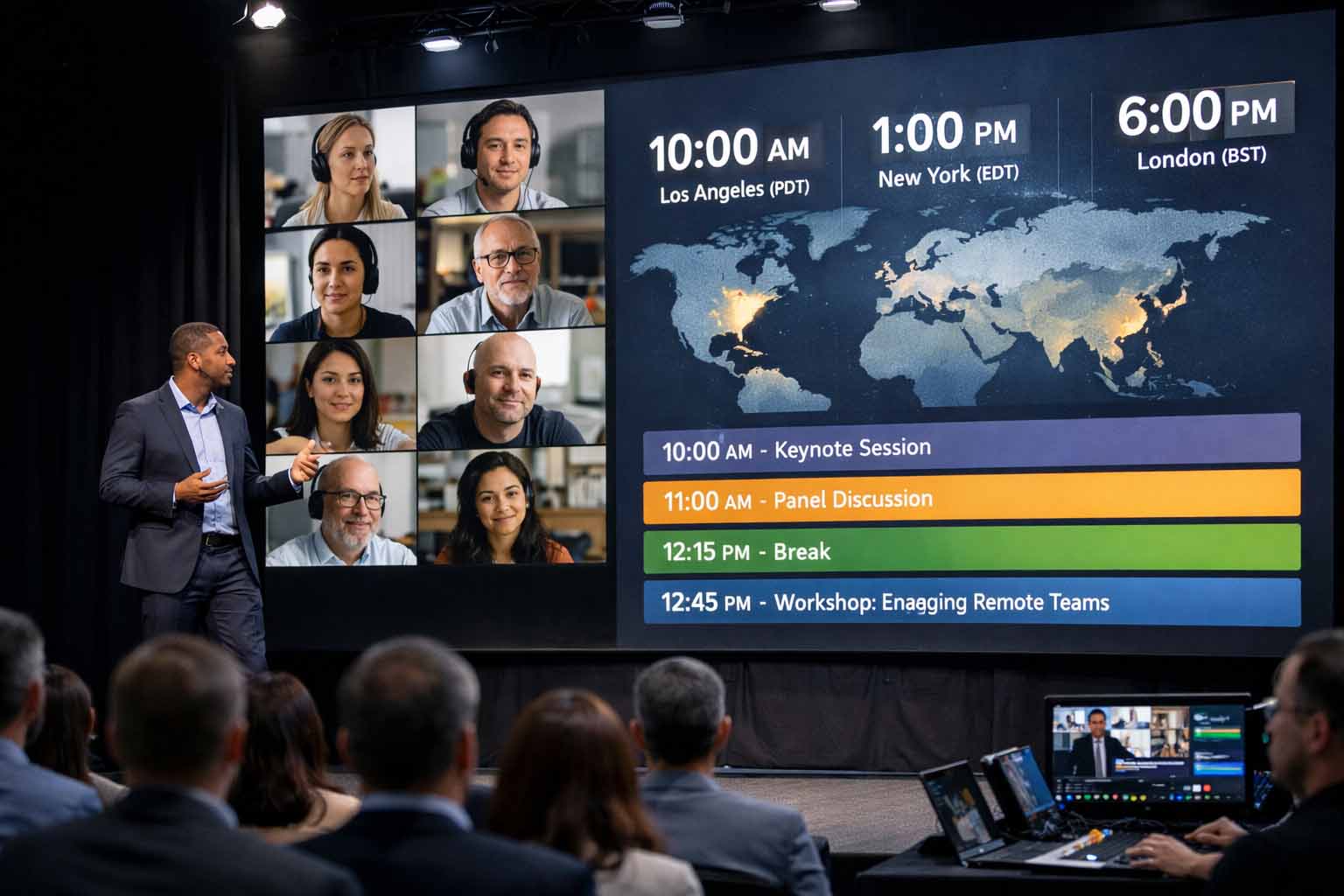
Planning Hybrid Conferences for Global Audiences Without Timing Errors
Hybrid conferences promise reach and flexibility, but they also expose weaknesses in planning that rarely surface in fully in person events. Time sits at the center of those weaknesses. A single agenda now has to function across continents, working hours, and personal routines. If timing feels careless, the entire experience feels fragile, even if the content itself is strong.
Unlike physical conferences, hybrid events do not allow attendees to drift in and out unnoticed. A remote participant joins at a specific moment with a clear expectation. If nothing happens, frustration sets in fast. That emotional response does not reset easily. Once trust is shaken, engagement drops, cameras turn off, and chat activity slows.
For conferences that involve speakers or partners across multiple regions, checking the current time in different regions gives planners a reliable, real world reference that automatically reflects daylight changes and seasonal shifts. Relying on a live time source instead of rough offsets helps teams align rehearsals, speaker briefings, and live sessions with greater confidence and far fewer assumptions.
This habit fits naturally alongside broader scheduling thinking discussed in best conference timing. Time decisions shape who can attend, how alert they feel, and whether the event respects their daily rhythm. When time is treated as a strategic choice rather than an afterthought, the entire program gains stability.
Why Hybrid Conferences Magnify Timing Problems
In person conferences have built in forgiveness. Attendees gather early. Conversations stretch between rooms. Coffee breaks absorb small delays. Hybrid events remove those buffers completely. A remote attendee logs in at the published time expecting immediate value. Even a short delay feels longer when someone is staring at a silent screen.
Timing errors also create visible stress for speakers and moderators. When one session runs late, the pressure moves downstream. Moderators shorten introductions. Speakers rush slides. Question segments disappear. Viewers notice the tension even if it is never acknowledged.
Another issue is perceived fairness. Hybrid audiences span regions, and patterns become obvious over time. If live sessions always favor one time zone, others quietly disengage. Registration numbers decline in those regions, not because the content is poor, but because participation feels inconvenient or dismissive.
Selecting Time References That Everyone Understands
Global events require a clear and consistent time reference. This does not mean forcing everyone into one local time. It means choosing a primary anchor and communicating it without ambiguity. Confusion often arises when schedules mix formats or rely on mental conversion.
North American time zones cause particular trouble, especially around seasonal changes. Referring directly to PST time reduces misinterpretation and prevents calendar conflicts. It also limits last minute emails asking speakers to confirm when they are actually expected to join.
This approach reflects principles outlined in precise timing tools, where consistency outweighs clever formatting. Attendees do not want elegance or novelty in schedules. They want certainty and reliability.
Designing Schedules That Match Human Energy
Time planning is not only about clocks and conversions. It is about attention. Remote audiences fatigue faster than in person ones. Screens demand constant focus. Distractions are always within reach. Schedules that ignore these realities lose engagement quickly.
Shorter sessions consistently perform better online. A forty minute block feels focused and achievable. Sixty minutes pushes attention. Anything longer requires exceptional delivery to hold interest. Breaking content into tighter segments gives attendees natural moments to reset.
Breaks deserve equal care. Online breaks are not filler. They allow people to stand up, rest their eyes, and process information. Clear labeling matters. A scheduled pause feels intentional and reassuring. An unexplained gap feels like a technical issue.
Guidelines That Support Remote Engagement
- Keep live sessions concise and purpose driven
- Rotate premium time slots across regions
- Provide recordings shortly after sessions end
- Display session times in multiple regions clearly
Using Numbers to Reduce Schedule Risk
Numerical rules bring discipline to creative planning. They force difficult choices early and prevent optimistic assumptions from creeping into the agenda. Numbers also protect teams from exhaustion during long events.
Clear numerical constraints help prevent cascading delays that damage the overall experience.
1. Leave at least fifteen minutes between live sessions for technical resets, speaker transitions, and unexpected issues.
2. Limit total live programming to six hours per day to protect attention and energy across regions.
3. Schedule speaker rehearsals a full day before live delivery to identify timing and technical problems early.
These figures are based on repeated observation across large hybrid conferences. They are not arbitrary limits. They reflect human and technical capacity.
Making Time Visible Across Teams
Time communication works best when it is visual. Written schedules are easy to misread under pressure. Visual cues reduce cognitive load and speed up decision making during live operations.
Color coding by region, role, or session type allows staff to understand priorities instantly. Speakers know when they are live. Moderators know when to prepare. Producers know when to reset equipment and feeds.
| Region | Reference Zone | Preferred Live Window |
|---|---|---|
| Asia Pacific | SGT | 09:00 to 15:00 |
| Europe | CET | 10:00 to 16:00 |
| North America | PST | 08:00 to 14:00 |
Speaker Experience Shapes Event Quality
Speakers carry the emotional weight of hybrid conferences. Their comfort level directly affects delivery quality. Unclear timing adds stress that audiences can sense immediately.
Personalized schedules help. Each speaker should receive a version that includes only their sessions, rehearsal times, and backup contacts. Showing everything increases confusion rather than clarity.
Including local time reduces mental effort. Confirming schedules multiple times may feel repetitive, but it prevents last minute panic. These practices align with ideas shared in session timing precision, where preparation is treated as part of performance.
Technology That Reinforces Shared Awareness
Tools do not replace good planning, but they reinforce shared awareness. Live clocks, countdowns, and synchronized timers help teams operate as a unit. Questions about timing disappear, replaced by focused execution.
Platforms that show current time across cities also help new team members integrate faster. Everyone sees the same reference without asking. That shared understanding reduces friction during live delivery.
For background on why offsets change and why manual conversion fails, the time zone overview explains how global standards work and why assumptions lead to errors.
Event Summary
Hybrid conferences succeed when time is treated as a design element rather than a technical detail. Clear reference zones, realistic session lengths, visible schedules, and consistent communication prevent errors and protect trust across regions.
Consistency Builds Long Term Confidence
Attendees rarely praise good timing openly. They simply notice when it is missing. Smooth schedules feel invisible. That invisibility signals competence and care.
When hybrid events respect time across continents, participation stabilizes. Speakers agree to return. Audiences stay attentive. Word spreads quietly through reliability rather than promotion.
Planning hybrid conferences for global audiences without timing errors is not about perfection. It is about respect. That respect appears in every schedule shared, every rehearsal held, and every session that begins exactly as promised.